
Kimpton Cottonwood Weddings: Tips for Couples from a DJ
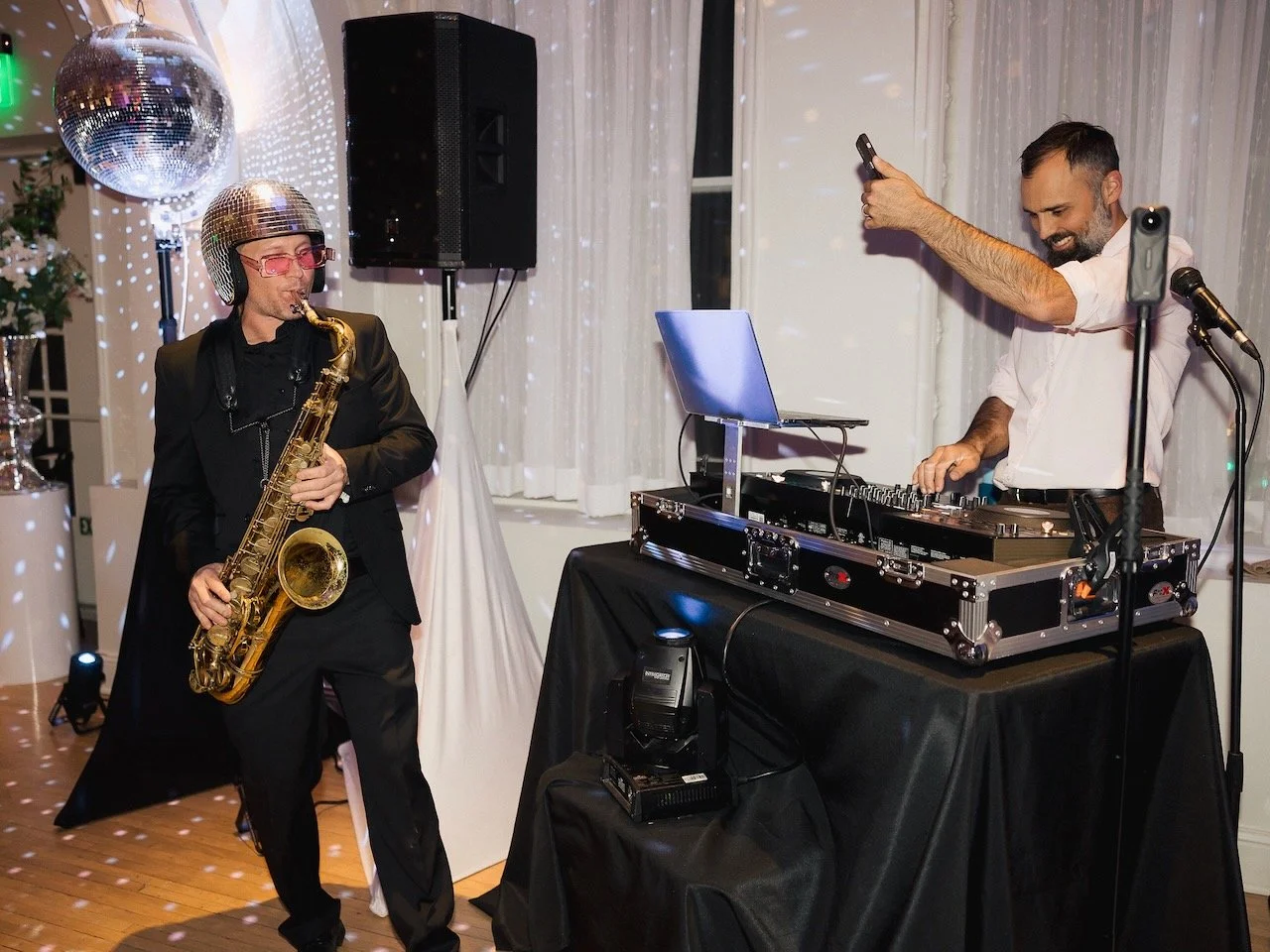
Photo by: Brooklyn Ash Photography
The first time I DJ'd the Schimmel Ballroom at the Kimpton Cottonwood, I made the rookie move. I set the booth up in the middle of the room.
Looked great. Sounded weird. The mic announcements got swallowed, the music scattered, and I spent the night fighting the room instead of working it.
I've set up in just about every corner of that ballroom since. I love it there. It has a skyline view that does half your decorating. But here’s the thing: It's a 10 to look at but a 6 to listen to.
The good news is that the fix is all on the DJ, and once fixed, it throws a great party.
So before you book the prettiest room in Omaha, let me save you the trial and error.
Hi, my name is Brent, and I founded Alternative Wedding DJs in 2016. I’ve personally DJ’d 100+ weddings and have planned and organized thousands of events throughout my career as an event promoter and the owner of House of Loom nightclub.
I’ve obsessively studied the group psychology behind a great party, why people run to or away from a dancefloor, and how a room’s size and layout can help or hurt the experience. I’ve done about a dozen weddings up there, including Ellie and Christian's disco-ball wedding. And my team of DJs in Omaha and Lincoln have done as many, including Angie Spence, Crabrangucci, Yascoe, and AWDJ co-owner Elliott Harris.
And we have notes!
So we wanna take that insight and deliver it to you on a nice little platter so you can avoid rookie mistakes like I made, and get the best experience, with the least amount out stress, from your wedding venue.
So here we go …
Where the DJ booth goes (this makes a difference)
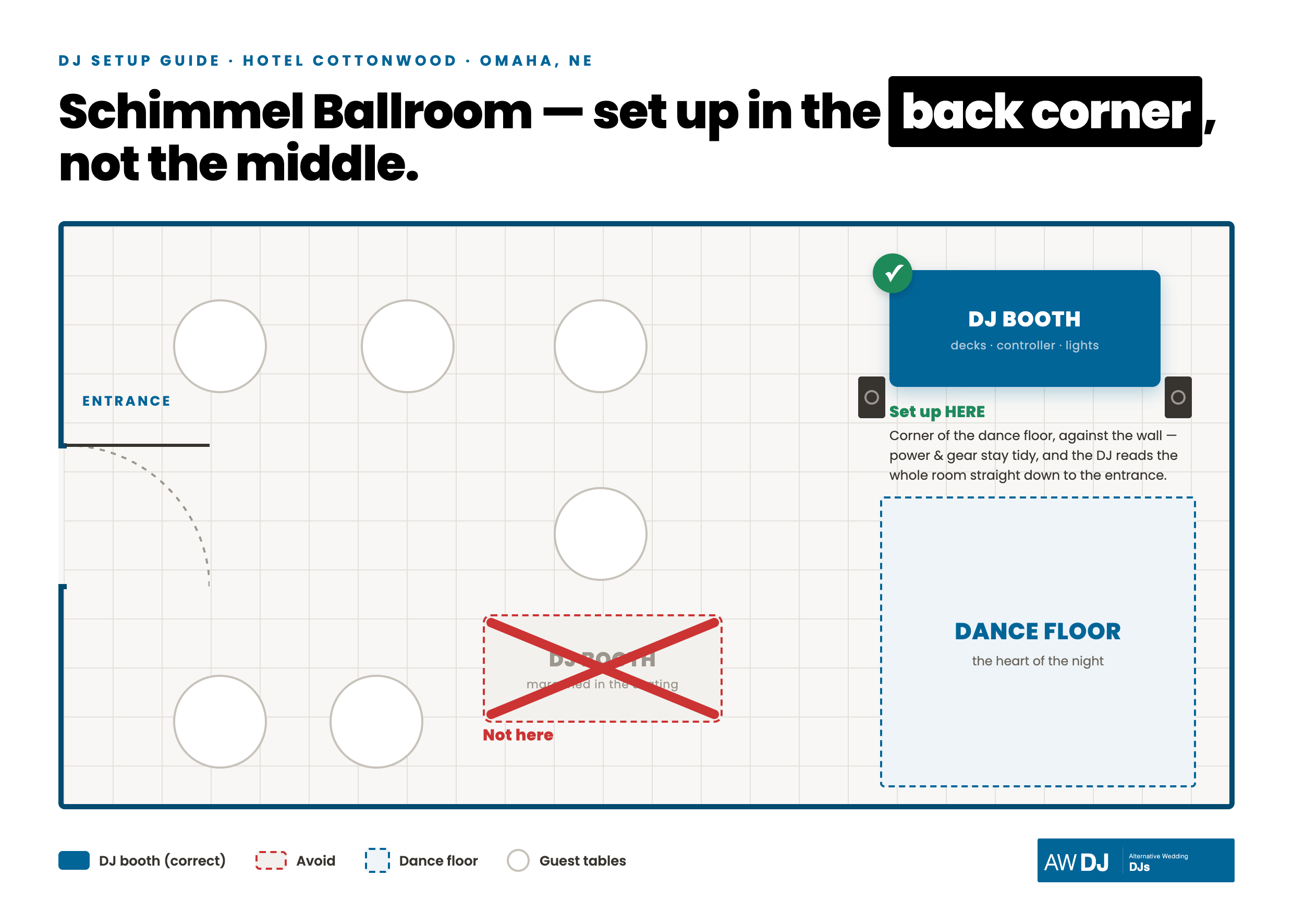
The wood floor in the Schimmel soaks up sound, which is what you want. Everything else in there reflects it. Three walls of windows, hard surfaces, that gorgeous barrel ceiling. All of it throws the sound right back.
So placement is the whole game. Not the middle of the room. I already paid that tuition for you. Using the northwest corner and projecting across is my recommendation. The sound travels in one direction instead of bouncing around, the mic comes through clean, and your toasts don't turn to mush.
If you want more tips on how to set up a room for dancing, check out our “Turning Your Event into a Dance Party in 7 Steps” guide.
You can get married in there, too
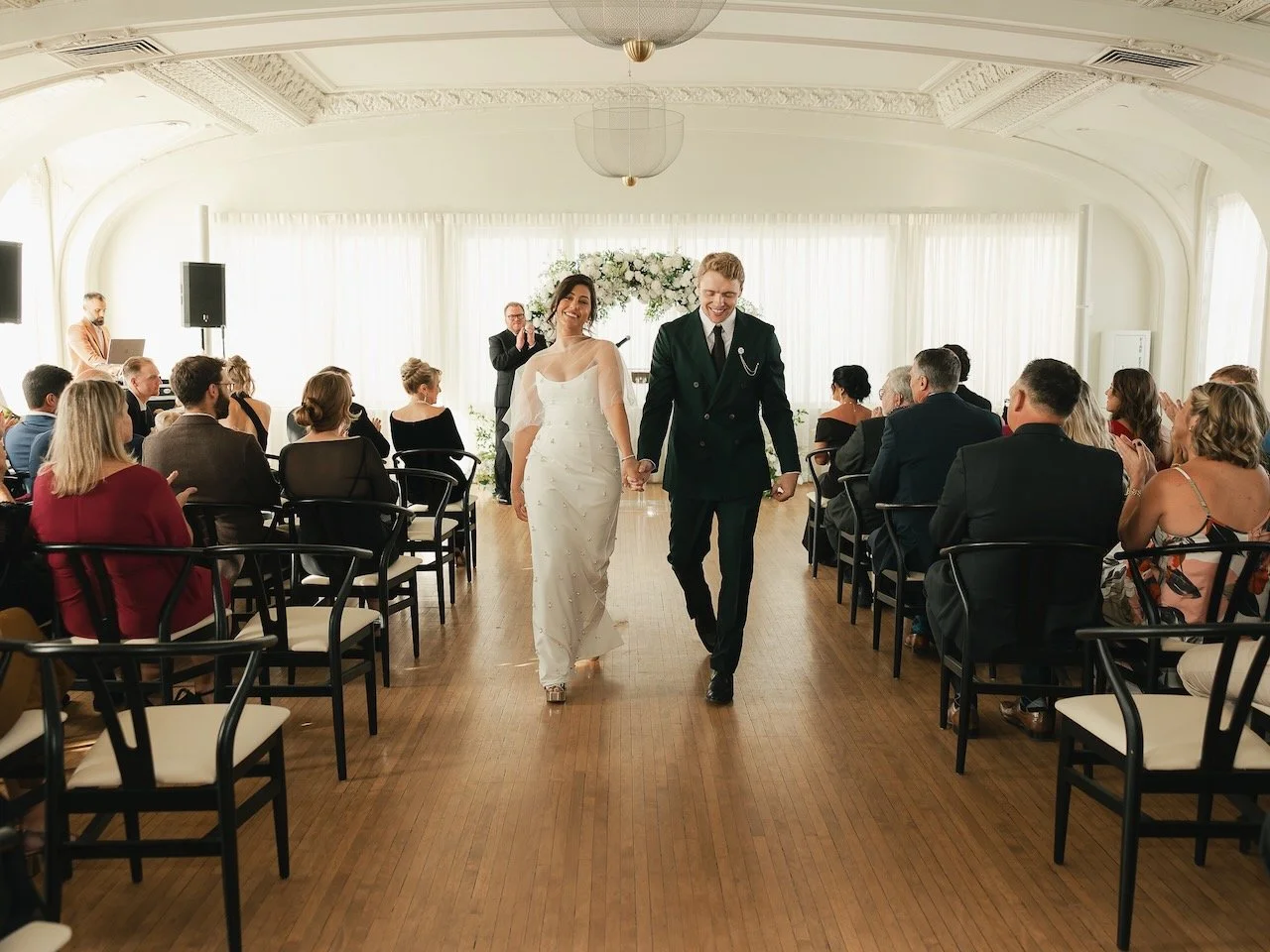
The Schimmel handles the ceremony and the reception both. I've run it two ways. DJ in the northwest corner, or behind the guests near the southwest corner.
Northwest works better. Two reasons.
One, that's where the booth lives for the reception anyway, so nothing moves mid-event. Two, it sounds better. Put the speakers behind the crowd and you've got two sounds colliding: the officiant's live voice from the front, and that same voice through the speakers behind everyone. They meet in the middle and the ear can't sort it out. From the northwest corner, it all comes from one direction.
And no, the booth doesn't look tacky in your ceremony photos (maybe I’m biased? lol). I’ve seen photographers work around it or make it look unobtrusive (like the photo above).
After the ceremony, everyone heads downstairs for cocktail hour, and the vendors get one hour to flip the room for dinner. Plenty of time, as long as your DJ shows up early and pre-stages before the ceremony. Cut that flip close and your guests walk back into a half-built room.
Wanna know how long cocktail hour should be? Check out our “case for a 5-hour reception” blog.
Some weddings use two rooms, not one
The all-in-the-Schimmel setup above is the common one, but it's not the only way. Elliott ran a wedding here where the couple did cocktail hour in the 4A foyer, dinner and toasts down in the Gold Coast on the lower level, then moved everyone up to the Schimmel for dancing. It works, and the change of scenery keeps the energy fresh.
If that's your plan, two things matter. First, the DJ sets two spots and can't just wheel one rig around mid-night, so the lower room gets built first and the Schimmel gets pre-staged before doors. A single speaker can travel from cocktail hour into dinner, and the hotel's house music covers the gap while the DJ runs up to switch the ballroom on. Second, budget real time for the elevator move up (see Insider info below).
One timing heads-up: watch the dinner clock. At one wedding the plated service ran 15 to 20 minutes behind between salad and the entrée, and against an 11 p.m. curfew that comes straight out of your dancing. Ask your caterer and planner to protect the timeline so the party doesn't get squeezed at the end.
Skip the rented dance floor
Real one: the Schimmel's wood floor is already the best surface in that building to dance on. Wood has a little bounce, so legs stay fresh and people dance longer.
I've watched couples pay good money to truck in a rental floor and drop it right on top of the best surface you could ask for. I used to run a dance club called House of Loom, and we hosted a Sunday salsa night for years, specifically because we had a wood floor, and serious salsa dancers know wood is the only way to go.
For Ellie and Christian’s wedding, they chose a black-and-white checkerboard dance floor because it matched their colour theme. So that made sense.
I’ve also seen people use a rental floor to create a more defined sense of place for where people should be dancing. That’s helpful, too.
But if you're only doing it because you think you have to ... don't. Save the cash because the floor you want is already there.
When dinner wraps and the dancefloor opens, we turn the speakers off the tables and aim them across to the far side. That gives the dance floor its own pocket of sound and keeps the volume off the folks who came to talk. Heads up: whoever sits closest to the speakers gets the most volume. That's where your party friends go. Not Grandma.
How loud you can go
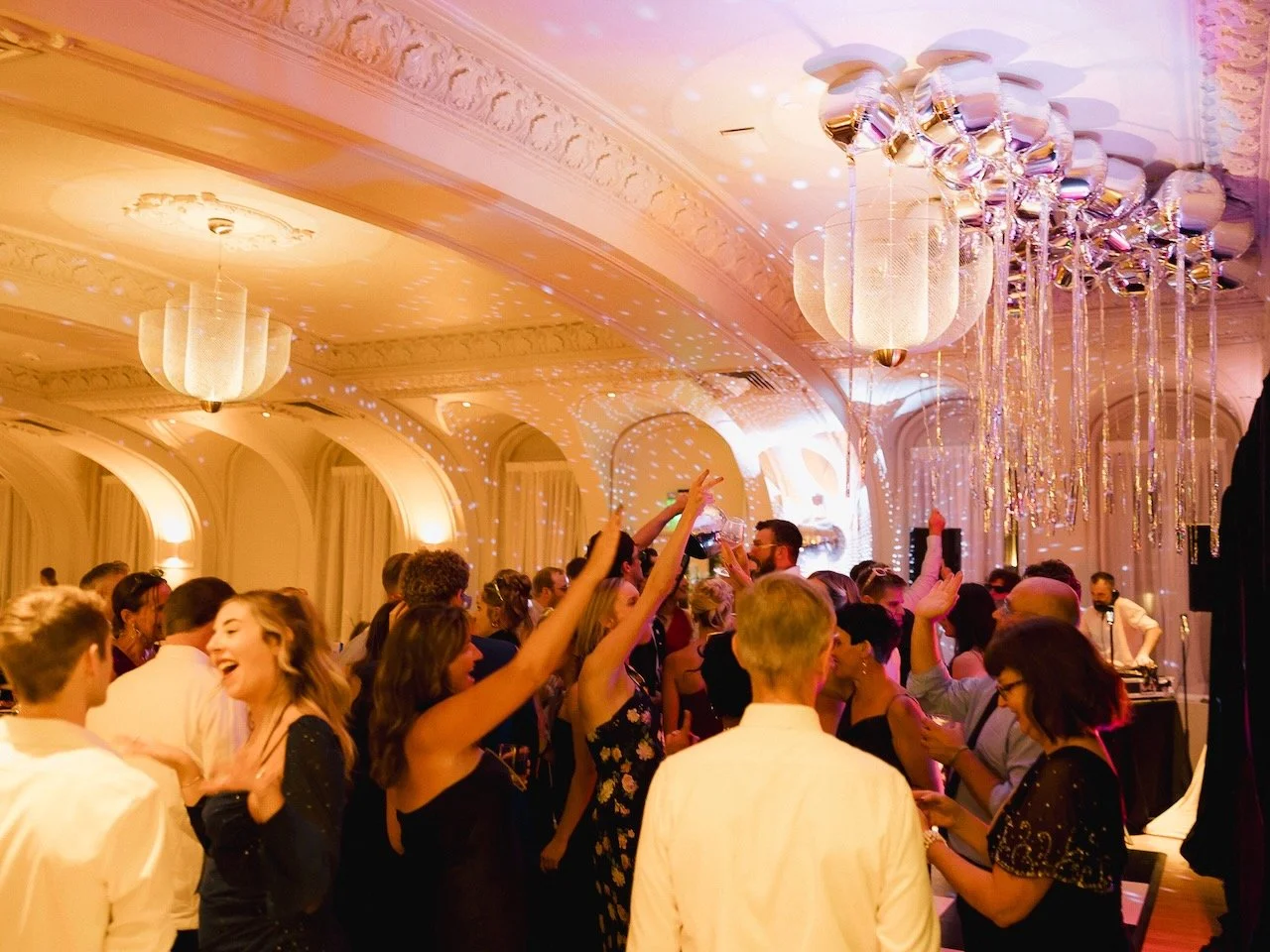
Loud enough to make it feel like a party.
One thing to know, and it's why I stay careful here: there are hotel rooms directly below the ballroom. Most nights it never comes up. At one wedding, the party went fully feral. I had the bass up, and I caught a couple of noise complaints from the rooms below across the night. Every other Cottonwood wedding I've done, nothing.
So the room can go off. The DJ just can't shove the sub past what the building wants. Done right, the floor still slaps and nobody downstairs files a report.
One more rule, and this one isn't about bass: the Schimmel has an 11 p.m. sound curfew. The hotel holds you to it, and the guest rooms below will call it in if you run over. We've stretched to 11:30 by request before and caught complaints for it. So don't build your night assuming you can. Plan the timeline to peak before 11 and make the last 30 minutes your big finish, not your warm-up.
Insider info
A few small but important details we’ve learned by doing enough weddings here:
Load-in runs long. We add about 20 minutes versus a normal venue. Everything comes through the valet area, onto the elevators, and up to the top. Then we head back down to park (or have valet to do it and get a parking pass from the wedding coordinator).
There's gear storage in a stairwell just past the kitchen, so cases aren't sitting anywhere people can see them.
Power's thin on the north side, and there's nothing on the north wall itself. Planning uplighting or a lit moment up there? Your DJ or rental crew needs long extension cords or battery fixtures. Figure that out before the day, not during it.
Know the elevators. There are two guest elevators in the lobby plus two service elevators in the back that run straight to the 8th floor. When it's time to move guests up to the Schimmel, announce that they can use all of them or the move drags. Moving about 180 people took us 20 to 25 minutes. It's smoother on a Friday than a Saturday, when the hotel's busier and valet is slammed.
Cocktail hour, downstairs
Cocktail hour usually happens in a room on the first floor, and I like that the night moves across two spaces. People get a change of scenery before they come back up for dinner, which helps reduce guest fatigue.
That cocktail room has speakers in the ceiling and a wall panel I plug into. No extra speaker to rent, no add-on from us. We run the cocktail playlist we built straight through the house system, off the DJ’s phone with an adapter. When dinner's ready, the planners walk everyone to the elevators and up to the Schimmel.
If your cocktail hour is somewhere without that wall panel (we've done it out in the 4A foyer, by the circular bar and the ice-cream station near the pool), the DJ can drop a single speaker and send the music to it wirelessly. Either way you get clean cocktail sound with nothing extra to rent.
The music that fits the room
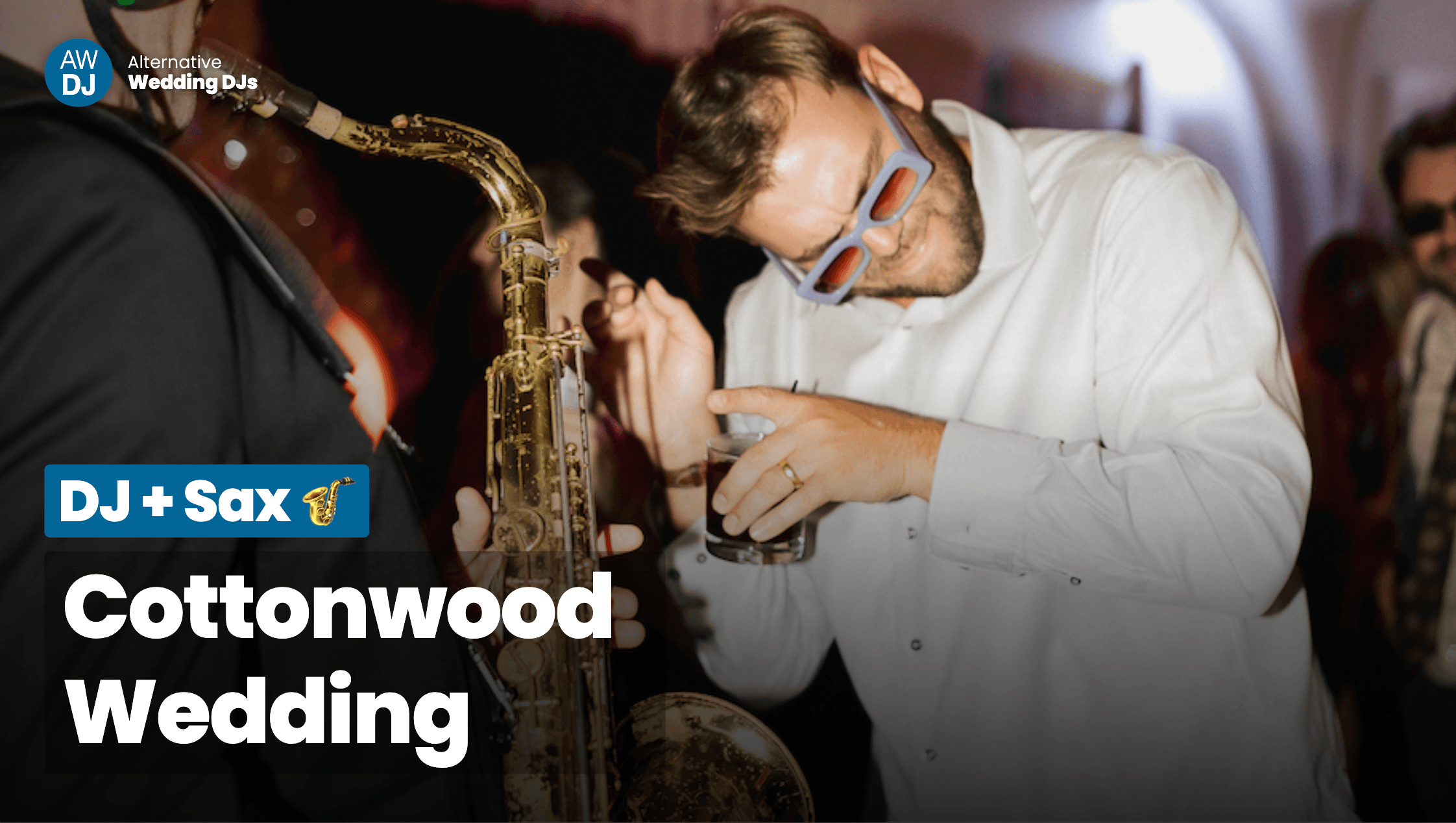
See video from a wedding ceremomy and reception we DJ’ed inside Schimmel Ballroom. Photo by: Brooklyn Ash Photography
Cottonwood pulls a taste-forward crowd, and the size of the Schimmel plays into it. You don't need a wall of sound in a room this size. A small room that's packed beats a big room that's half empty. Every time. The Schimmel is built to feel full.
It's also a great room for a moment. At Ellie and Christian's wedding I cued up "Dancing Queen," and our sax player (which you can choose as an add-on service) walked onto the floor mid-song while nobody saw it coming. Phones up, room gone. If you want a sax add-on or a planned surprise, this room rewards it. See video above for how it went.
Check this link to hear a live DJ mix we recorded at a Hotel Cottonwood wedding.
If your count is bigger
The hotel's other room is the Gold Coast Ballroom. Floor-to-ceiling windows, an outdoor lawn, bigger capacity. More of a traditional event space, a different feel than the Schimmel's step-back-in-time thing. One heads-up: it sits near the pool, so a summer date can end up competing with the pool crowd on noise and bodies. So wedding receptions tend to start a bit later in there, from my experience.
And whenever the night ends, you're in the Blackstone District. Bars and spots a short walk away. The after-party books itself.
FAQ
Do you need to rent a dance floor at the Schimmel Ballroom? No. The Schimmel already has a wood floor, the ideal surface for dancing because the give keeps people on their feet longer. Rent a custom floor only if it matches your colors or you want to define the dance area. Otherwise you're covering up the best floor in the room. Save the money.
How does cocktail hour music work at the Kimpton Cottonwood Hotel? Cocktail hour usually happens in a side room on the first floor with speakers built into the ceiling. We plug into the house wall panel and run the cocktail playlist we built together, so there's no extra speaker to rent and no add-on fee. When dinner's ready, planners bring guests up to the Schimmel Ballroom.
Can you have your wedding ceremony in the Schimmel Ballroom? Yes. We set up in the northwest corner so the sound projects clean and the booth's already in place for the reception. After the ceremony, guests head downstairs for cocktail hour while the room gets flipped for dinner, about an hour. The trick is the DJ arriving early to pre-stage.
How loud can the music get at the Cottonwood Hotel? Loud enough to pack the floor. The one thing to know is there are hotel rooms below the ballroom, so a DJ who knows the room keeps the bass reasonable instead of maxing the sub. Done right, the floor still hits hard and nobody downstairs complains.
What time does the music have to end at the Cottonwood? The Schimmel has an 11 p.m. sound curfew because there are hotel rooms right below the ballroom. A good DJ builds your timeline so the peak of the night lands before 11 instead of getting cut off. Push past it and you risk noise complaints from the rooms downstairs.
Getting married at Cottonwood?
It's one of our favorite rooms in Omaha to play, weird acoustics and all, because once you learn it, it delivers. And we’ve learned it.
Book a meeting with us and we’ll walk you through your night. See what we do across Omaha and Lincoln, or look through a real Cottonwood wedding we DJ'd.
— Brent Crampton, Company Founder